"Painters Eleven" Canadian Abstract Painters

Canadian Art Groupon their website says that: 

"Painters Elevenwas officially formed in 1953 in Oshawa at the home of Alexandra Luke; this formation was the result of a successful show, Abstracts at Home, held at the Simpson's department store in Toronto a few months before. 

The famous photograph by Peter Croyden taken for a show in 1957 at the Park Gallery in Toronto, shown here:

left to right: Tom Hodgson, Alexandra Luke, Harold Town, Kazuo Nakamura, Jock Macdonald, Walter Yarwood, Hortense Gordon, Jack Bush, and Ray Mead. 

The two canvases facing forward represent Oscar Cahen who tragically died in a car crash in 1956 and the canvases facing the wall are for William Ronald who had resigned from the group in 1957 and was now working in New York. 

Disbanded in 1960 all the surviving members went on to continue their careers and remaining true to abstraction."

Oscar Cahen (Canadian, 1916 - 1956)

Austin Healey 100 Engine
oil on board, 36" x 48", signed
Courtesy of the Cahen Archives
Thielsen Gallery Logo

Jack Bush

Bush changed his style of painting from abstract expressionism to colour field abstraction as a result of two major influences on his career - the French artist Henri Matisse and American critic Clement Greenberg. Bush's paintings are characterized by their muted, glowing colours that appear to be absorbed by the canvas. 

Oscar Cahén

Cahén achieved distinction as one of Canada's leading illustrators before becoming an abstract expressionist painter. His European training and maturity influenced many of his Painters Eleven colleagues, and were it not for his untimely death in 1956 certain critics believe Cahén would have become the major artist of Painters Eleven. 

Hortense Gordon

The senior member of Painters Eleven, Gordon taught art for most of her life, travelled in summer months to France where she studied and painted. A painting of hers was exhibited in an exhibition at the Art Gallery of Toronto in 1909, before most Painters Eleven were born. 

Tom Hodgson

Both Hodgson's large abstractions and his watercolours are noted for their rich, beguiling colours and juxtapositions, as are his beautiful paintings of beautiful women - wives, lovers, children. A champion canoeist, Hodgson competed in the Olympic games of 1952 and 1956 as a member of Canada's Olympic Canoe Team. 

Alexandra Luke

Luke refined her elegant abstractions through studies with famous American artist/teacher Hans Hofmann. She was instrumental in the founding of Painters Eleven - its inaugural meeting was held in her studio in Oshawa, Ontario. Married into the McLaughlin Carriage Company family, which later became General Motors, she bequeathed her enormous art collection to The Robert McLaughlin Gallery in Oshawa, founded by her husband in the name of his grandfather. It remains the largest repository of Painters Eleven work in the country. 

Kazuo Nakamura

Nakamura stands rather apart from the majority of Painters Eleven with his quiet, sonorous paintings. His twenty-five year study of the interconnectedness between art and mathematics, and on another level, music, produced a defining body of work, his Number Structures. Nakamura was greatly influenced by - not painters or art movements - the magazine Scientific American. 

Jock Macdonald

A distinguished art teacher, Macdonald was an inspiration to his students in Vancouver, Calgary and Toronto. He began working in abstraction as early as 1934, and his work evolved into several forms of abstraction and "semi abstract" styles, including his famous Modalities. He met Jean Dubuffet in France and counted him as one of his greatest influences. 

Ray Mead

Mead's work was first exhibited at the Hamilton Art Gallery in 1946. He stopped painting for a period of about 10 years in the 1970s, but after having a dream of Hans Hofmann giving him a painting lesson Mead picked up his brushes again. He achieved a level of sophistication in his paintings and watercolours through excellent composition and his use of black and white with colour. 

William Ronald

In 1955, Ronald left Toronto for New York and the following year was taken on by the famous Kootz Gallery, which represented top rank abstract expressionists in New York. Ronald produced a body of work that truly epitomizes his reputation as an outstanding colourist and larger-than-life persona. 

Harold Town

Along with his flamboyant personality, Town is celebrated for his work in many mediums: painting, collage, assemblage, sculpture and works on paper -drawings, monoprints, etchings, linocuts, lithographs and serigraphs. A master draftsman, his drawings have been compared with Picasso's. He gained his first international recognition in 1952. 

Walter Yarwood

A painter of deep, richly dense colours and broad brush strokes, Yarwood gave up painting in 1960 for sculpture. He received numerous commissions to create major sculptures for Canadian government buildings, universities and airports. In the last ten years of his life he returned to painting, during which he painted vivid, plein air landscapes.

Click here: thielsen gallery and scroll down page to see an online exhibit of the members work.

The brief bios above were written by Thielson Gallery
Abstract Expressionism - American Painters

Helen Frankenthaler, Sam Francis and Robert Motherwell

Abstract Expressionism

Check out this link at Wikipedia which has a great article on Abstract Expressionism. 

Scroll down the page to "Major Artists" are those significant artists whose mature work defined Abstract Expressionism. 

The second list "Other Artists" are those significant artists whose work relates to American Abstract Expressionism.

The third list is related styles, trend, schools or movements.

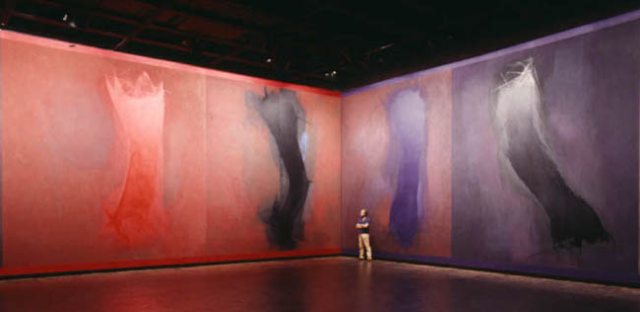
Steven Aimone - "The Spiritual Language of Art

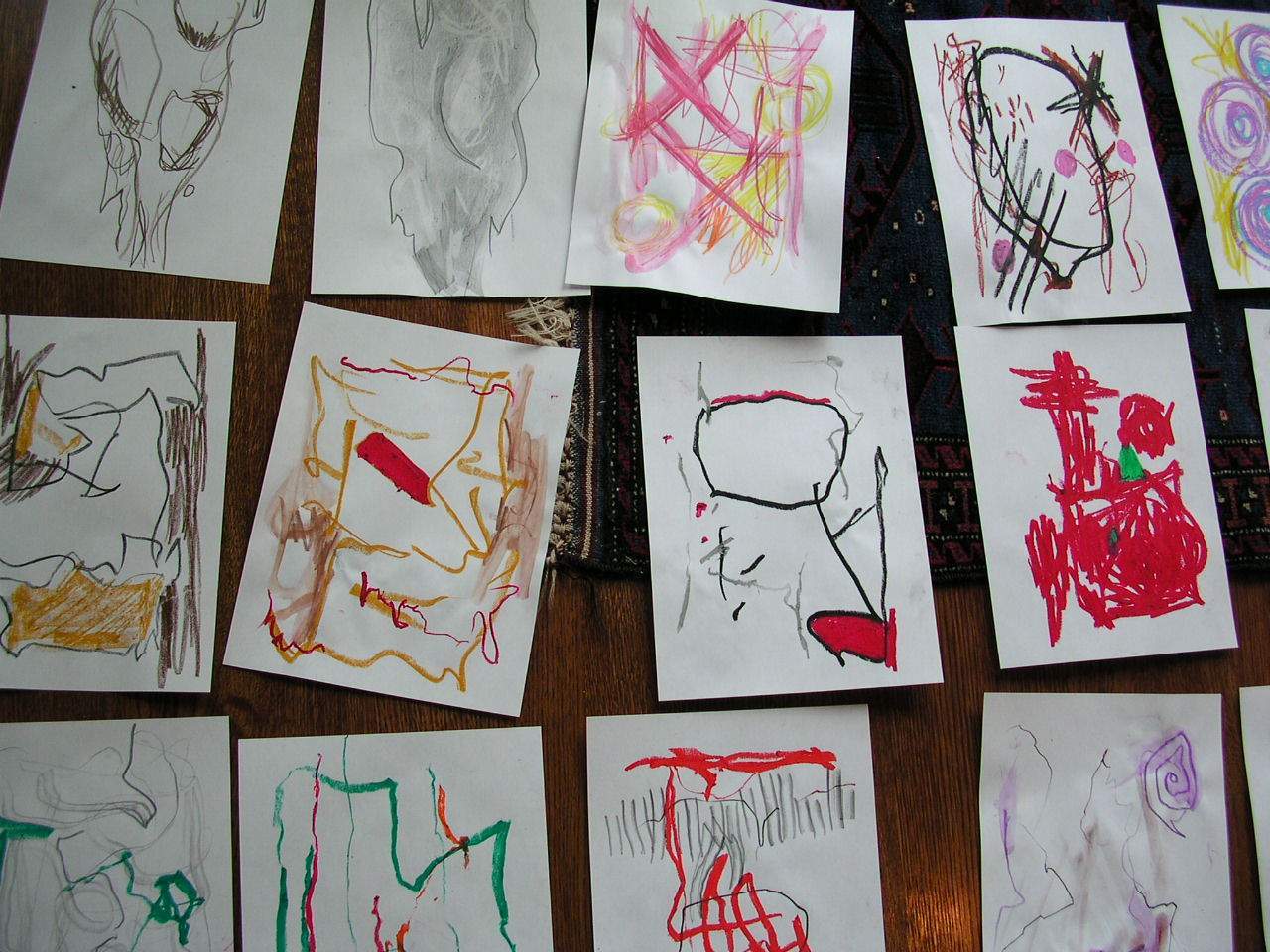
I took two drawing classes with Steven Aimone, called "The Spiritual language of Art". Mary Stewart of Vancouver Island Workshops organized these workshops. One was held in Nanaimo, BC and the other in Cedar a few miles south of Nanaimo. Steven is an excellent teacher and had us all working hard. 

Steven Aimone (M.F.A. in Painting and Drawing, Brooklyn College) is an artist, fine arts instructor, and independent curator who has taught numerous design workshops and courses to a wide variety of audiences: professional artists and craftspeople, college students, museum patrons, and school teachers.

Steven is the author of two books:

"DESIGN! A Lively Guide to Design Basics for Artists & Craftspeople"

and

"Expressive Drawing"

Aimone was a resident of Manhattan for most of his adult life where he earned an MFA in Painting and Drawing from Brooklyn College. His paintings and collage compositions have been the subject of four solo exhibitions in New York City, where he was also represented by Kathryn Markel Fine Arts, and are included in corporate and private collections nationally. 

Aimone has taught painting, drawing, and design at both Western Carolina University in North Carolina and Stetson University in Florida. Aimone now teaches "The Spiritual Language of Art" workshops--and offers related fine arts lectures--through Aimone Art Services.

EXPRESSIVE DRAWING

Live & Learn: Expressive Drawing: A Practical Guide to Freeing the Artist Within

Live & Learn: Expressive Drawing (AARP) (Hardcover)

By Steven Aimone

ISBN: 1600592813

Format: Hardcover, 204 pages

Publish Date: September 2009

Publisher: Lark Books

From the Publisher:

The many people who long to draw--but feel too intimidated to try--will rejoice at the wonderful first entry in this brand-new creative series. Written by arts educator Steve Aimone, it's packed with solid, friendly, hands-on instruction, as well as inspiring images, and backed by the trusted AARP name. Aimone teaches an accessible style called expressive drawing that emphasizes line and mark, rather than rendering a specific object, which for many people, can create barriers to self-expression. Exercises start off simple and quick, encouraging readers to work on instinct and feeling, while the later ones focus on detail and refinement. The book features hundreds of images of work by well-known artists from Dubuffet to Jim Dine--and each chapter includes a profile of someone who came to drawing late in life and achieved recognition. - Branded with the respected AARP name, which carries weight with millions of buyers - The first book in a series focusing on creative and popular topics - There is no other book on the market that combines a hands-on approach to expressive drawing with a coffee-table-level collection of master-status artists from various periods who work in this style - Aimone's warm, reassuring voice and his unintimidating approach make learning enjoyable.

Steven Aimone (M.F.A. in Painting and Drawing, Brooklyn College) is an artist, fine arts instructor, and independent curator who has taught numerous design workshops and courses to a wide variety of audiences: professional artists and craftspeople, college students, museum patrons, and school teachers. He is the author ofDESIGN! A Lively Guide to Design Basics for Artists and Craftspeoplepublished by Lark Books / Barnes and Noble (harcover in 2004, paperback in 2007).

Aimone was a resident of Manhattan for most of his adult life where he earned an MFA in Painting and Drawing from Brooklyn College. His paintings and collage compositions have been the subject of four solo exhibitions in New York City, where he was also represented by Kathryn Markel Fine Arts, and are included in corporate and private collections nationally.

Aimone has taught painting, drawing, and design at both Western Carolina University in North Carolina and Stetson University in Florida. Aimone now teaches "The Spiritual Language of Art" workshops--and offers related fine arts lectures--through Aimone Art Services. 

"The big world of small"

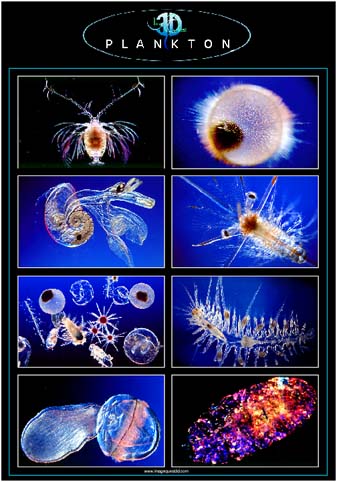
Our last evening in Bamfield we had a lab looking at plankton under a microscope; I was blown away by the beauty of these tiny creatures that came alive under the microscopic gaze. The following pictures and words are from a fabulous website calle Image Quest 3D. Please go there to see hundred's of fantastic images and articles. They will sweep you away.

Photos/ Image Quest 3D photo

Image-Quest 3D  website has the following to say about plankton:

 "The word plankton means, “that which drifts”. By this token a colossal number of marine creatures, both plants and animals, vertebrates and invertebrates, qualify as members of this extraordinarily important mass of life that glides and wanders, flaps and flips, floats and flies, sinks and swims within the oceans. The very biggest jellyfish weigh more than half a tonne, some deep sea relatives of the Portuguese Man-O-War would cover a football pitch and some of the colonial salps are the size and shape of ballistic missiles.

Much of plankton is small. Diminutive though these forms are in size, their habits, colour, life cycles and relationships are some of the most bizarre in the animal kingdom and many billions directly comprise the staple diet of the ocean’s very largest inhabitants."

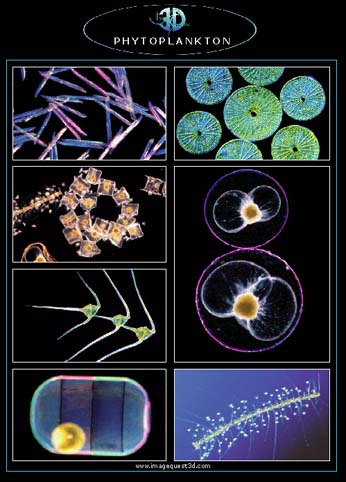
Phytoplankton

"This resource is much more important for the survival of this planet than all the rainforests and prairies put together. The microscopic plants of the sunlit surface waters of the oceans capture more oxygen than all other life forms. These are the organisms most likely to be affected by global warming, climate change and man’s indiscriminate and careless pollution of the oceans. Not only are they incredibly important, they are miracles of design and structure. Victorian microscopists recognised this and converted millions into microscope slides. Those illustrated in image number two are just such an example. Many of the colours are structural - like oil on water. All images are approximately x15,000." 

Content from Image Quest 3D.

Sketches from Bamfield

We were so busy while at Bamfield moving from one activity to another that there really wasn't much time for doing art. I managed to get the following sketches done. I have tons of photos for ideas.

Click on this link to see a more detail version of this trip, sketches and sketch books. 

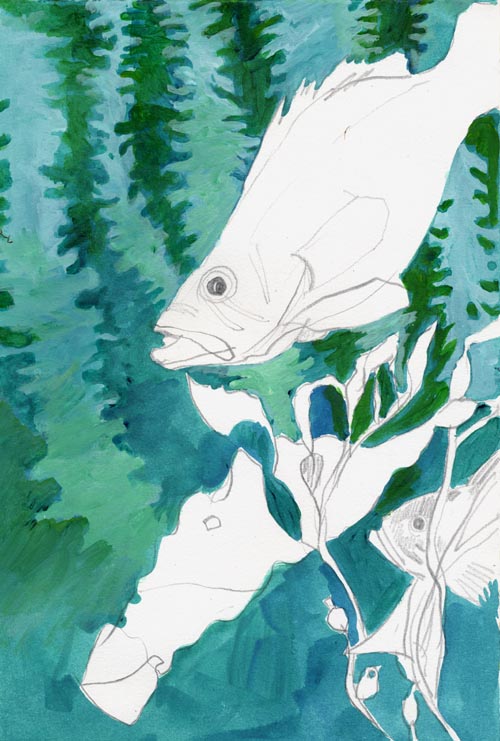
Quick pencil sketch of a Copper Rock Fish from the Aquarium in The Rix Centre. I painted the background later at home using a techinque that Mark Hobson demonstrated for us.

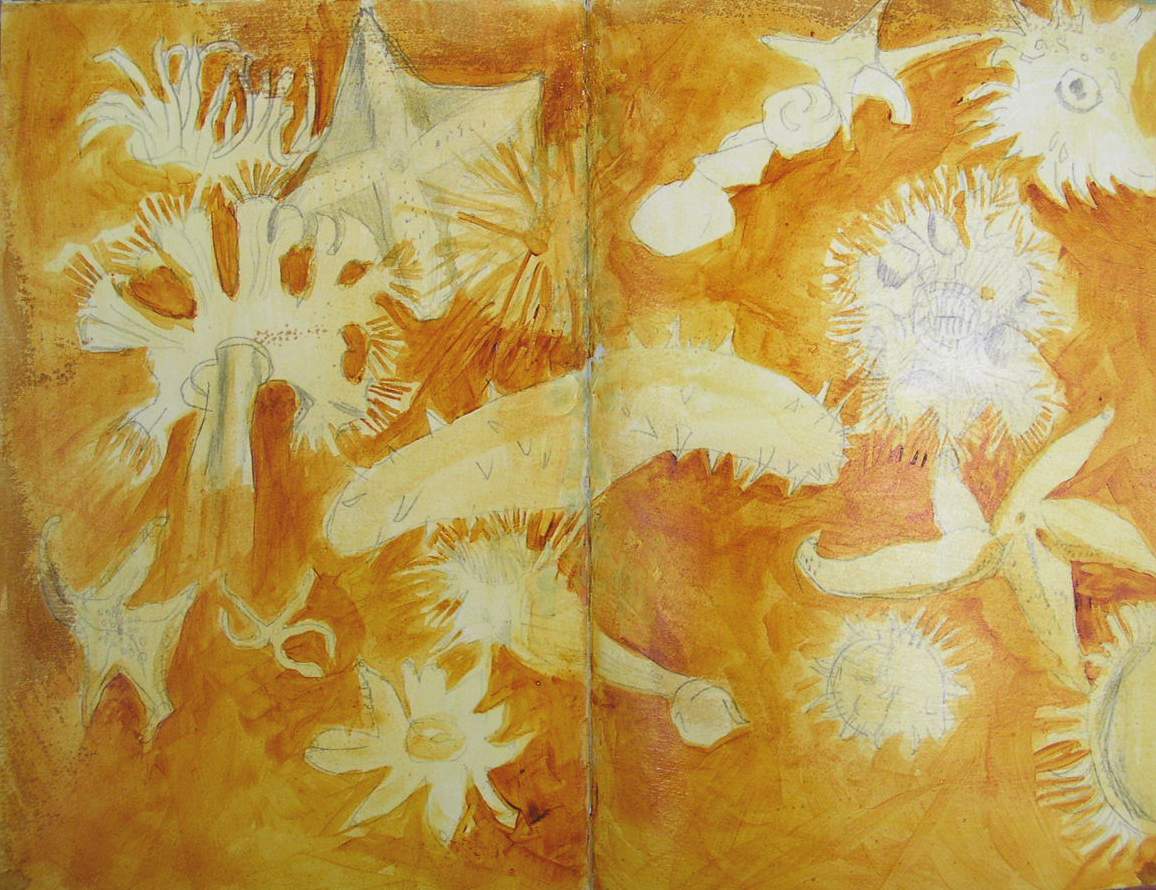
Quick Sketches from the invertebrate tank in the Whale Lab

Quick Sketches from the invertebrate tank in the Whale Lab

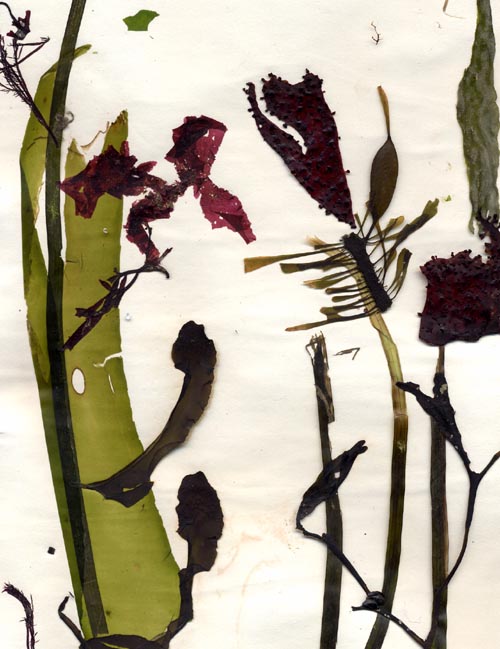
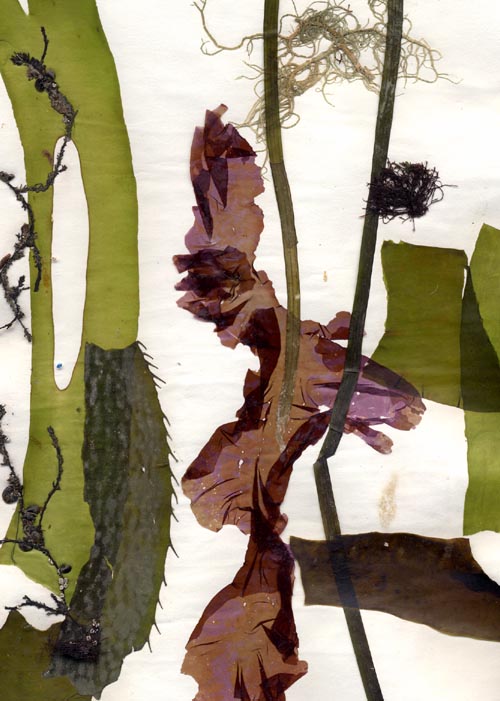
Algal Art - Pressed seaweeds

Pressed seaweeds

Pressed seaweeds

Pressed seaweeds

Pressed seaweeds

Algal Art

We had a really good lecture on seaweeds by the Bamfield Marince Sciences Centre Public Education Coordinator Anne Stewart. Anne's team had gathered dozens of examples of seaweed for us to look at which were displayed in water-filled glass dishes. Anne described how to make "Algal Art":  select pieces of seaweed, lay those on top of a piece of wet paper that has a fibre content that is low in acidity and high in absorbency. Lay this in a press to dry flat. Heavy duty wax paper was laid over top of the piece and then placed between many sheets of newspaper, j-cloths and cardboard. This takes several days to dry.

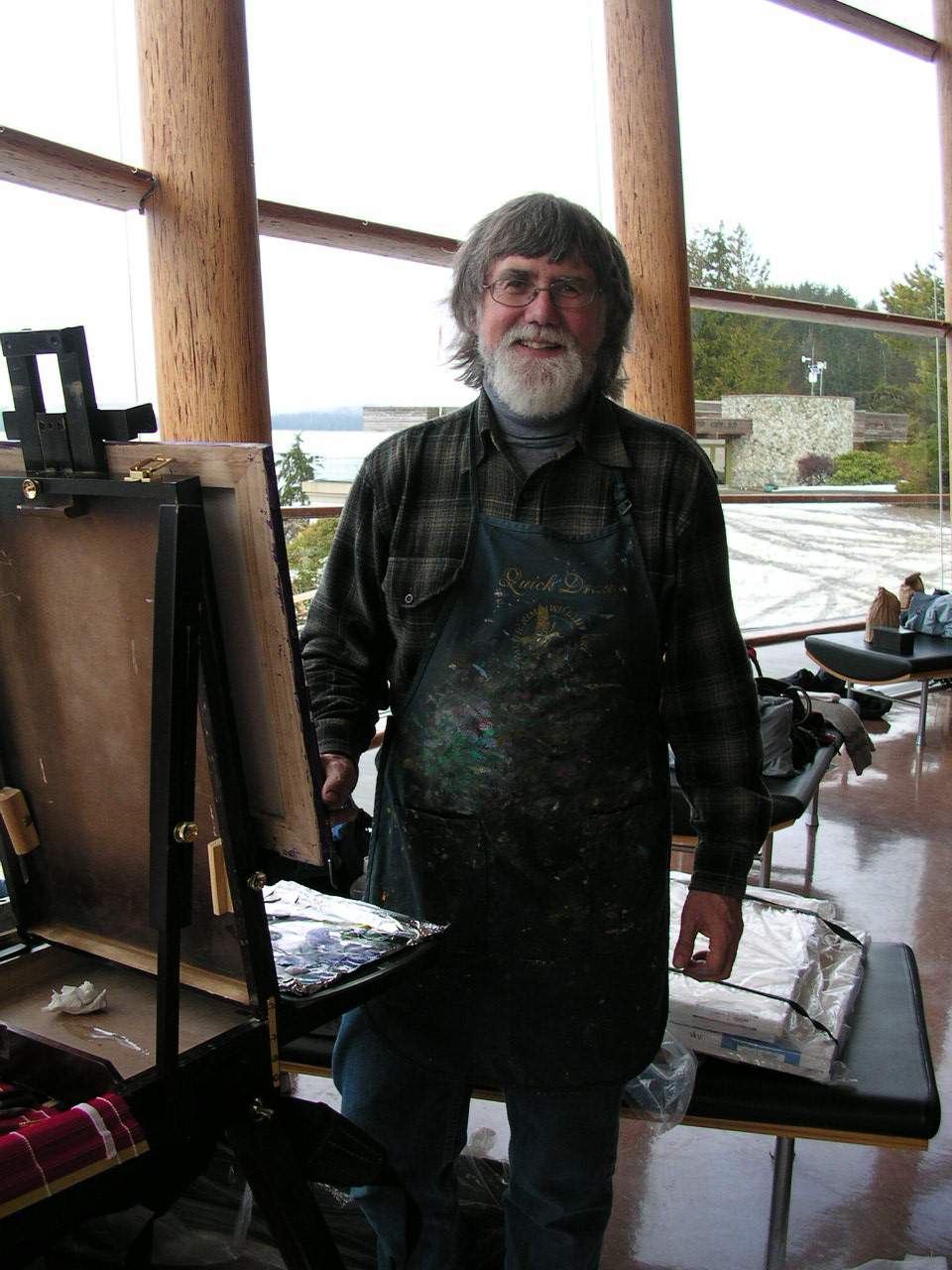
Mark Hobson

A lecture and demonstration by Mark Hobson was the main event for the first evening of our artist retreat. Mark gave a talk on his early life teaching science at Shawnigan Lake School and how he got to painting full-time and living in Tofino, BC on a float home. Mark gave a great demonstration on mixing ocean blue-greens and advice on how to paint underwater scenes especially of seaweeds. Our big group of 44 was divided into 4 groups and I was lucky enough to have Mark in our group. Mark is full of joy and he happily shared his knowledge of the natural world. He is a really nice person with a big heart, who was always jolly -- he was a lot of fun to be around. 

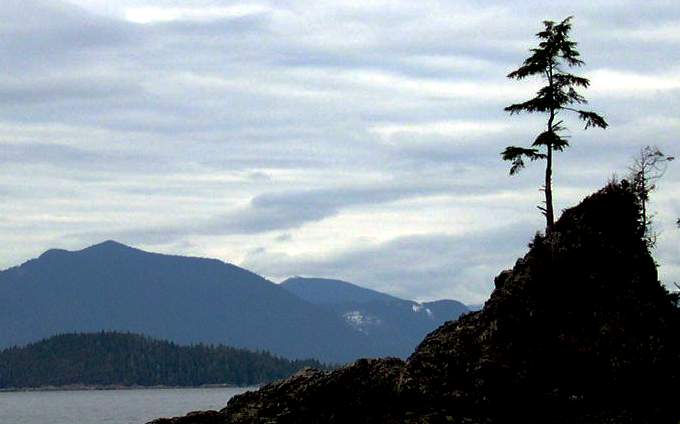
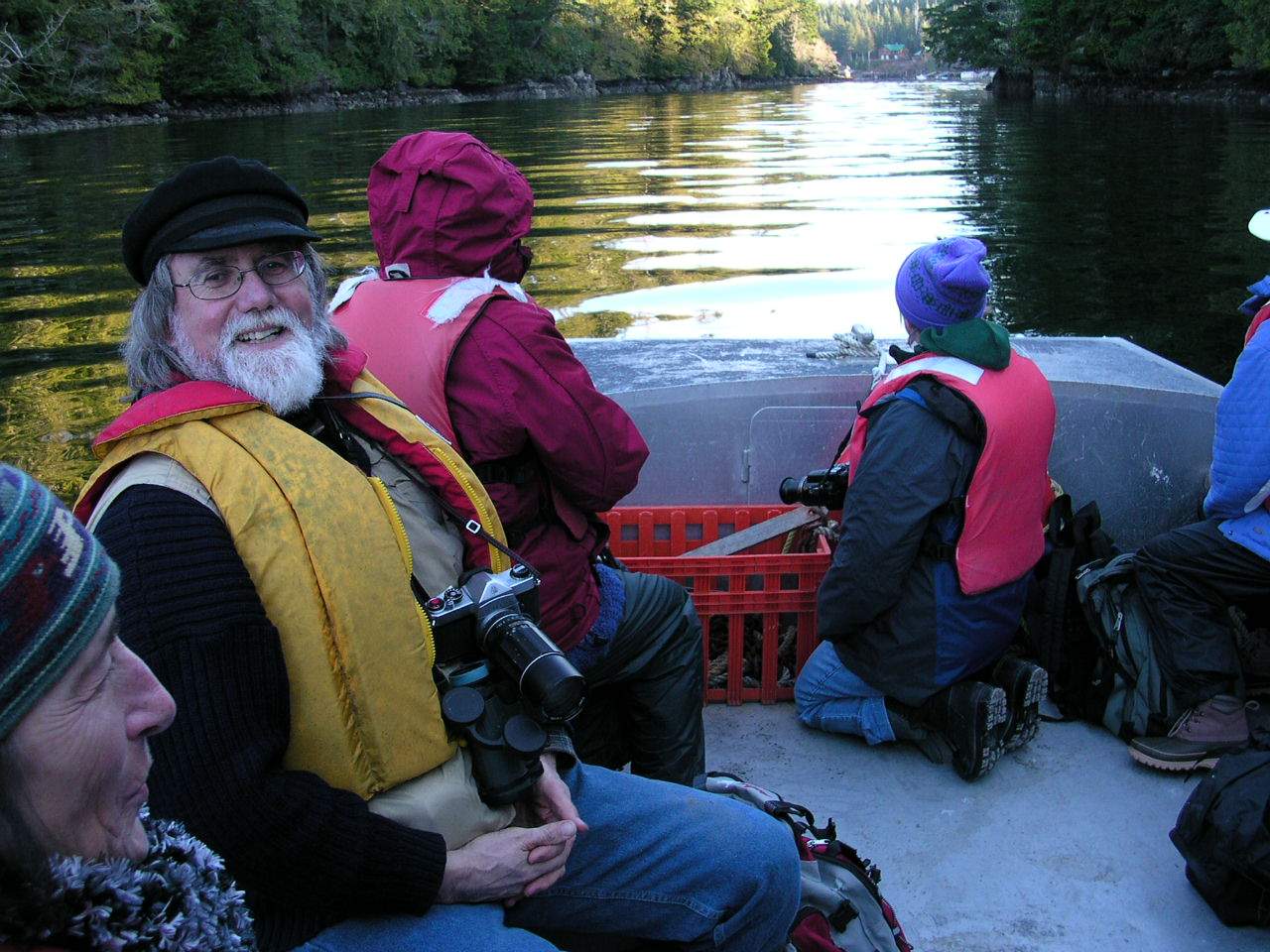
On our way to Grappler Inlet

Mark Hobson is based in Tofino BC., on the outer west coast of Vancouver Island where he has painted for over twenty years. A diverse artist in both subject and media, he is equally comfortable in watercolour, oils, and acrylics. Mark is best known for his passionate portrayals of the B.C. coast, from pounding surf to sheltered cove; from rainforests to the underwater realm. The richness of the natural environment and its wildlife comes alive in his work. Professionally trained as a biologist, he taught high school science for nine years before painting as a career. Self-taught as an artist, his paintings are simultaneously accurate and sensitive depictions of the many moods of wilderness and rural landscapes.

Mark painting in the Rix Centre

Mark painting in the Rix Centre

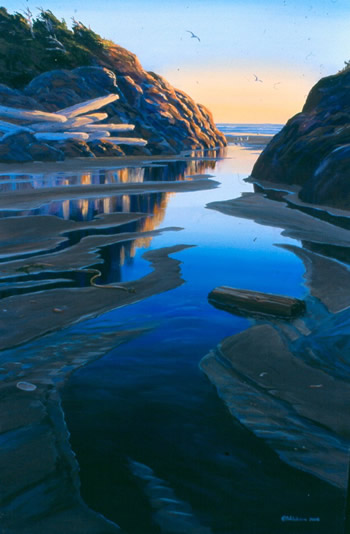
Mark Hobson "Green Point Rocks: Long Beach"

Mark Hobson "Green Point Rocks: Long Beach"

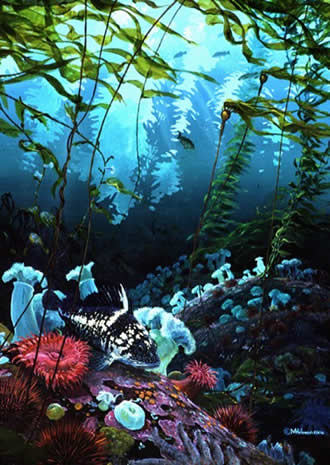
Mark Hobson "China Rockfish"

Mark Hobson "China Rockfish"

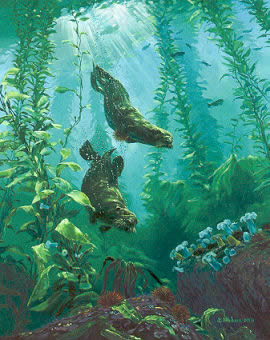
Mark Hobson "Sea Otters Return"

Mark Hobson "Sea Otters Return"